Afghanistan After the War

Afghanistan After the War

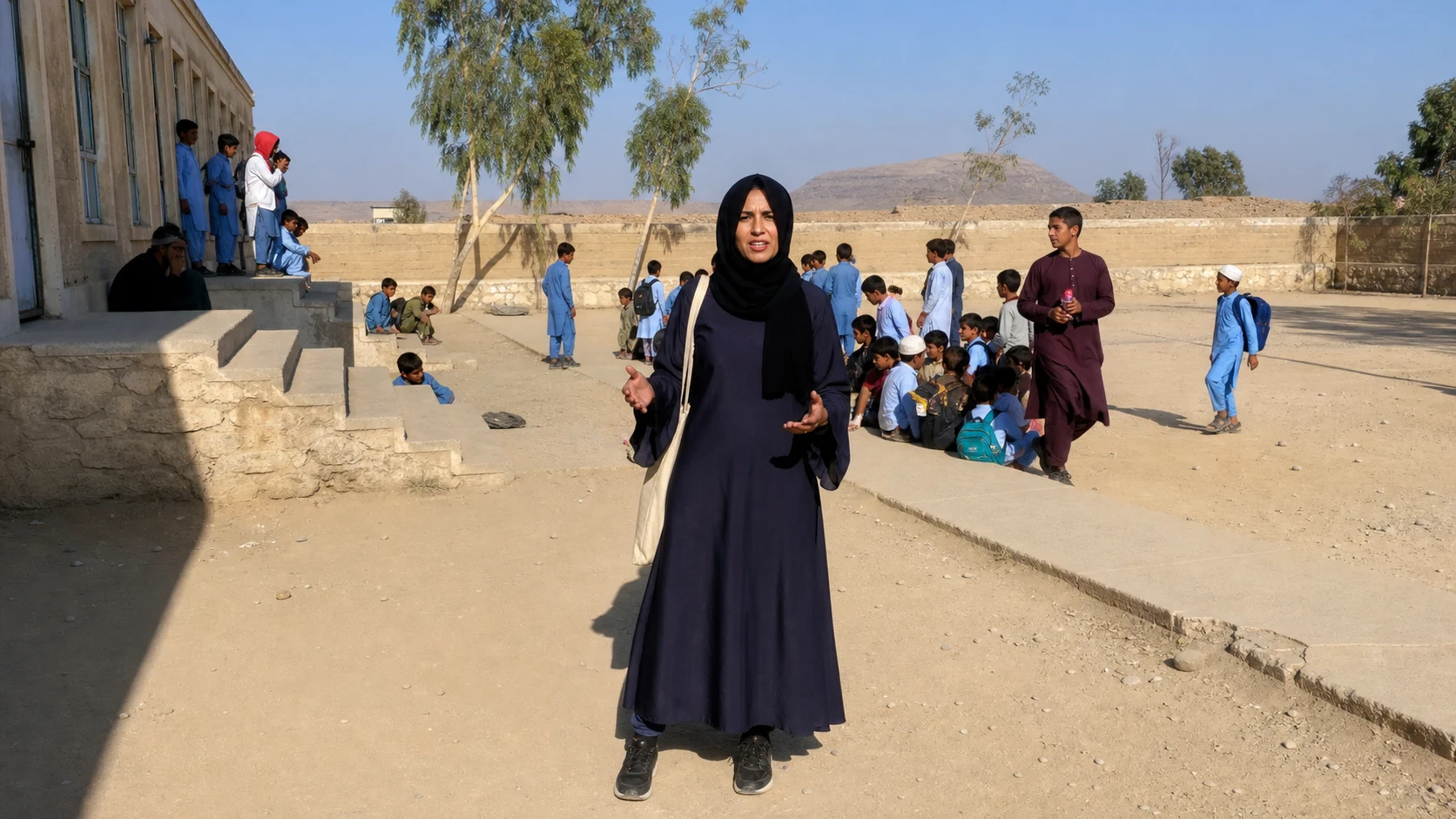
After the withdrawal of US troops on August 30 of this year, I traveled to Afghanistan.

I personally verified the situation and produced several reports.

Within this post, I share some of the video reports I produced for VOA.

Kandahar Hospital Reports Increase in Child Malnutrition Cases

With the severe humanitarian crisis devastating Afghanistan, Kandahar’s Mirwais Hospital reports an increase in the number of young children suffering from acute malnutrition.

Gaja Pellegrini reports from Kandahar, with contribution from Roshan Noorzai.

Afghan Civilians Fear Continued Violence as ISIS Launches Attacks

Since the Taliban took control of Afghanistan in August, attacks by the Islamic State have increased, particularly in the eastern province of Nangarhar.

Civilians in the region say they fear the threat of violence posed by the group known as Islamic State-Khorasan, or IS-K. For VOA.

Gaja Pellegrini-Bettoli reports from Nangarhar, Afghanistan.

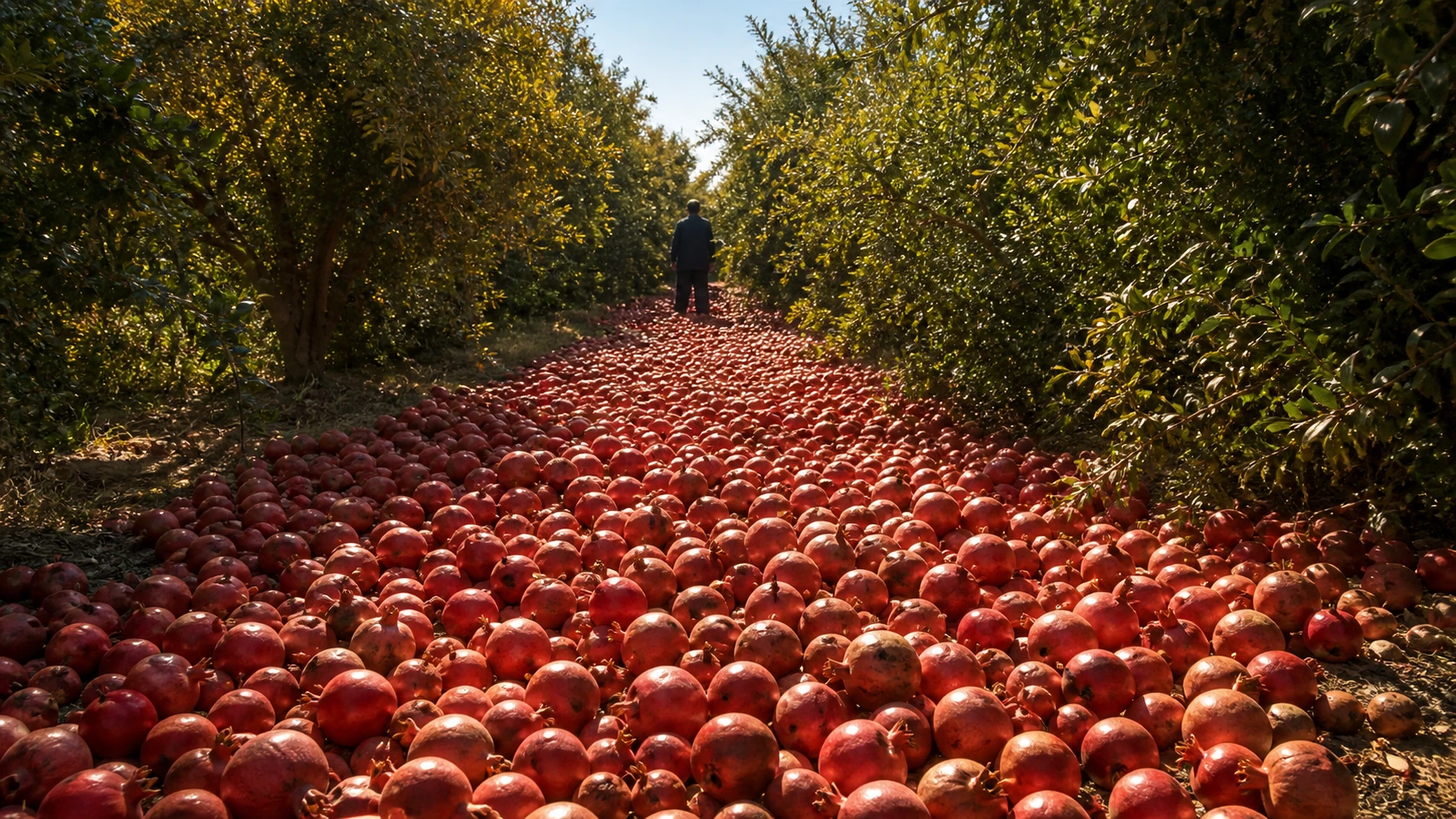
Southern Afghanistan’s Agricultural Industry Crushed by Years of War and Drought

Farmers in Kandahar’s Arghandab district say years of war, drought and lack of market access have devastated their farms and livelihoods.

Gaja Pellegrini-Bettoli reports from Kandahar.

Footage by Filippo Rossi. With contribution from Roshan Noorzai.


Reportage conducted in Afghanistan, December 2021

From "Lollars" to Default: Lebanon's Financial Crisis

From "Lollars" to Default: Lebanon's Financial Crisis

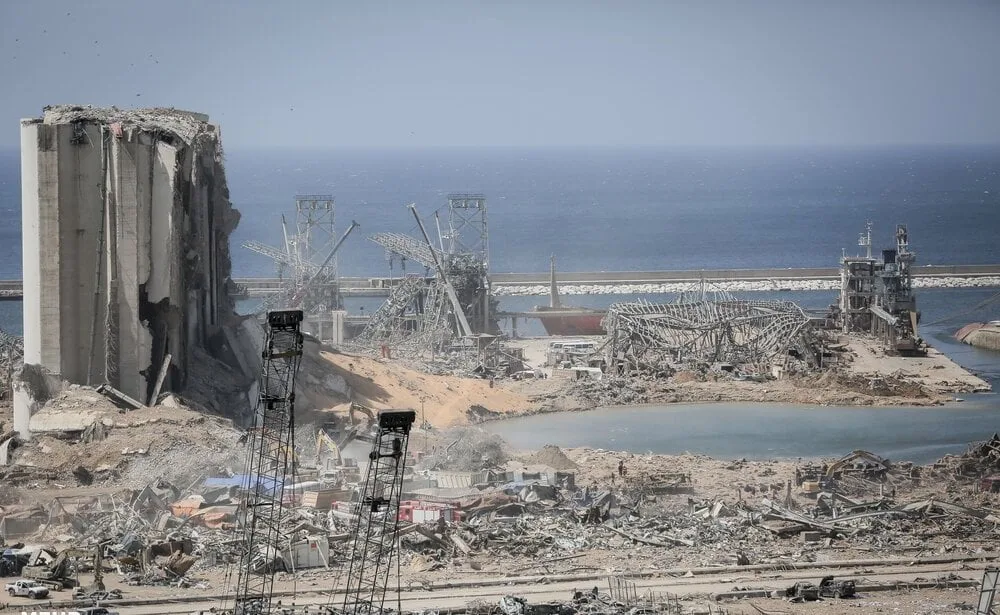
The explosion at Beirut port – the largest non-nuclear blast in history – which caused 178 deaths, over 6,500 injuries, and left 300,000 homeless in August 2020 was a preventable tragedy.

It was also impossible to hide.

The collapse of the financial system and the resulting financial crisis in Lebanon could also have been avoided. However, this was less visible.

A series of measures established by Lebanon’s central bank (Banque du Liban, BDL) and the government concealed the inevitable default through financial engineering instruments and the peg between the lira and the dollar.

While all solutions to end the crisis will be painful, reforming the system is a feasible undertaking. This is because the current situation is not the result of external factors, but rather of a malfunctioning (and endemically corrupt) political system and economic governance.

How Did Lebanon Reach Financial Crisis?

When, in October 2019, Lebanese civil society began protesting across the country demanding political reforms, the economy had already reached stagnation and Lebanon’s economic crisis was at the doorstep. At the time, the debt-to-GDP ratio was predicted to be 155%, making Lebanon one of the most indebted countries in the world.

Despite Prime Minister Saad Hariri’s resignation on October 29, the lack of confidence in the economy and banking system led to capital flight between 3 and 4 billion dollars.

This amount was withdrawn while banks were officially closed to (most) customers after the October revolt. When banks reopened, “normal” customers found it increasingly difficult to withdraw cash from their US dollar accounts.

This, in turn, caused the black market rate of USD to skyrocket. The Lebanese pound has lost about 90% of its value since late 2019. From its official fixed bank rate of 1,507 lira per USD, it reached 13,125 lira.

This coincided with the term “lollar” appearing on social media. A play on words between the term “dollar” and the acronym “lol”, meaning a Lebanese dollar, or a US dollar stuck in the Lebanese banking system: an entry in a computer with no corresponding currency.

Banks did not have sufficient liquidity: they were no longer able to return customer deposits because they were no longer there.

This lack of accountability, which adds insult to injury, is also made possible by the fact that customers have no legal recourse: they can go to court but will lose since there is no law protecting them in this situation.

The Lebanese Economy: An Imperfect System

Dan Azzi, an economic analyst and former Lebanese bank executive who coined the term lollar, breaks down the causes of the crisis highlighting three points.

Lebanese expatriates living abroad sent their savings in USD to Lebanon for retirement. These deposits were then used to support the lira peg.

This allowed the peg – introduced in 1997 – to be stable for the last 20 years while, at the same time, it overvalued the Lebanese currency, leading Lebanese to live beyond their means.

Once Lebanese bankers were able to attract expatriate investments through financial engineering, they would lend the money to the BDL at very high interest rates and the BDL would use these funds for imports.

The current amount of declared reserves in Lebanon is estimated at about 15 billion dollars in cash and another 15 billion in gold, representing about a year and a half of GDP, which stands at 20 billion.

In theory, the country is wealthy: the reason for Lebanon’s financial crisis is that the number of claims is too large in amount.

According to Azzi, the only solution, albeit painful, is to reduce claims by implementing cuts. The analyst explains that reserves are wasted on subsidies such as fuel or that funds leave the country through a system that favors powerful and well-connected people.

At this rate, he adds, in about 15-18 months, the remaining deposits will disappear and only gold will remain. The next stage, if nothing is done to prevent it, will be to find oneself in a scenario similar to that of Mogadishu in 1993.

For the Lebanese economy, one of the consequences of pegging the Lebanese currency to the US dollar – at an inflated rate – was that Lebanon was no longer competitive compared to its neighbors and, as such, became dependent on imports.

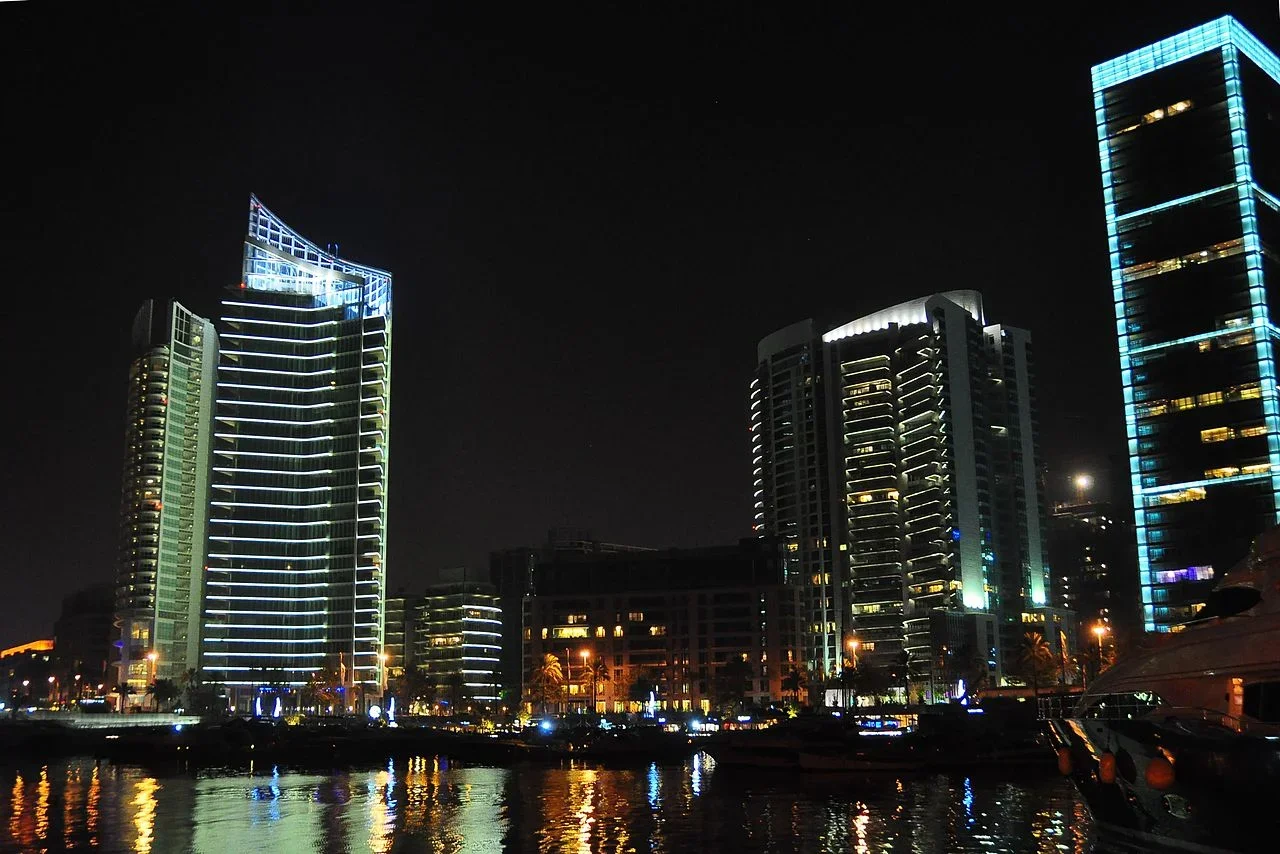
Beirut Central District: Symbol of Lebanon’s Financial Crisis

Zaitunay Bay, Downtown Beirut Zaitunay Bay, Beirut Central District - Photo: Hussein Abdallah

Mike Azar, a debt finance consultant and former professor of international economics at Johns Hopkins School of Advanced International Studies in Washington DC, believes the crisis could have been avoided and emphasizes the need for political governance reform.

One of the instruments he deems necessary is the creation of an economic crisis steering committee to analyze the complexity of issues holistically by qualified experts without conflicts of interest.

Essentially, the dollar peg is unsustainable and does not incentivize reforms. Furthermore, because of how the current system works, foreign aid money contributes to currency devaluation, which ultimately harms everyone. According to Professor Azar,

“The international community still thinks it is dealing with a government [in Lebanon], but there is no government: it is pure anarchy.”

He explains that the social safety net being created only serves to keep the streets calm for future elections; it lacks planning, oversight or sustainability.

The World Bank’s $246 million loan, whose conditions were agreed upon last January, offers an example of the system’s malfunction: the loan was supposed to support more than 150,000 of Lebanon’s poorest families with monthly cash payments, however, it was suspended by the World Bank at the end of May.

The international financial institution asked the government to clarify the reasons behind the Social Affairs Minister’s modifications to the $246 million loan intended for Lebanon’s most needy families before releasing the funds. At this point, Professor Azar considers it unlikely that the loan will arrive.

The Responsibilities That No Institution Wants to Take

Following Wednesday’s street protests, BDL Governor Riad Salameh reassured depositors yesterday that the central bank is not bankrupt.

He added that people’s deposits are safe and will be returned soon, canceling the decision to stop withdrawals from dollar deposits at a higher rate than the official exchange rate but much lower than the informal market rate.

This effectively places it at about one-third of the black market value of USD – difficult to consider it a good deal – although it remains the only way for many to access their funds.

Lebanese banks have blocked dollar accounts and blocked transfers abroad. But since Circular 151 was issued last year, depositors have been allowed to withdraw dollars, with funds paid in local currency at a rate of 3,900 pounds.

In a video posted months ago, Governor Salameh stated that the funds the BDL lent to the government were in Lebanese lira and not in dollars, clarifying that the funds used for imports are the reason for decreased bank liquidity.

He also added that the BDL is aware that depositors’ dollars went to finance imports, citing the lack of any responsibility in the matter by the central bank.

The governor’s office was contacted, but was not available for comment at the time of writing.

To understand how the crisis has affected the daily lives of the Lebanese, one need only look at the long lines at gas stations, ATMs, longer power outages than usual, or the price of groceries that has increased by 400%.

Luna Safwan – a Lebanese journalist and human rights activist – notes:

“We have four hours of electricity a day, generators run 24/7, hospitals cannot afford to operate, it is impossible to go to the supermarket without spending 1,000,000 lira on basic goods… not to mention the current political fraction, and politicians acting like teenagers”

Indeed, the current Lebanese government acts as a caretaker.

Political paralysis and lack of accountability have complicated an already disastrous economic crisis: irritable political leaders are unable to form a new government and implement the necessary reforms to unlock foreign aid.

Lebanon has been without a government since the massive explosion at Beirut port last August destroyed areas of the capital. Prime Minister-designate Saad al-Hariri (the same one who resigned in 2019, in a scenario reminiscent of musical chairs) and President Michel Aoun have been unable to agree on the appointment of ministers for months.

In its recent report, the World Bank ranked Lebanon’s financial and economic crisis among the top ten, perhaps the top three, most serious crises globally since the mid-nineteenth century.

In March 2020, Lebanon failed to repay a $1.2 billion Eurobond, the country’s first sovereign default in history. This had never happened before, not even during the 15 years of civil war.

The country’s future cannot afford further inertia.


Translation of my article for ISPI dated 04/06/2021

Israel Torn from Within

Israel Torn from Within

The United Nations refers to the West Bank, Gaza, and East Jerusalem as “Occupied Palestinian Territories” – not “Territories” – in an attempt to highlight the geographical continuity and unity of its people.

The reality on the ground, however, is in stark contrast with this definition: different political, social and economic dynamics – exacerbated by the impossibility of free movement of people (and goods) between parts of the territory – have contributed to creating a chasm in Palestinian society and a unified identity.

The lack of communication between civilians in Gaza and those living in East Jerusalem or the West Bank often places foreign humanitarian workers in the privileged, albeit strange, position of interacting with different areas and being asked by Palestinians: “Tell me, how is life in Gaza? Gaza (or the West Bank or East Jerusalem)?”

Today, however, what has caught everyone’s attention is the sense of unity expressed by Palestinians throughout the Territory and the violence in the so-called integrated communities within Israel.

While, unfortunately, wars between the State of Israel and Gaza have become predictable and cyclical, the rift within Israel is unexpected and potentially has more lasting consequences.

The reason for this change has been maturing for some time and its roots lie in structural changes within Israeli and Palestinian societies.

Palestinians in Gaza and the West Bank

Crossing Gaza from Eretz into Israel, the sad poverty is oppressive, and it is a constant that only gets worse in times of war.

According to UNRWA (United Nations Relief and Works Agency for Palestine Refugees in the Near East), since the beginning of the pandemic poverty rates have peaked at 80%.

Along the border you can see children and teenagers searching for metal scraps or pieces of cement, both considered by Israel as dual-use materials (metal to build rockets and cement to build tunnels), making them scarce and high value along the Strip.

Extreme poverty in Gaza, particularly after Hamas’s rise to power in 2006 and the subsequent blockade by Israel and Egypt in 2007, has significantly contributed to the disconnect between the population of the Strip and that of the West Bank.

The bitter relationship between Hamas – which does not recognize the State of Israel – and Israel, which classifies it as a terrorist organization, is palpable at the border. After the Israeli checkpoint, a Palestinian Authority checkpoint (hamza hamza) acts as a buffer before arriving at the Hamas checkpoint (arba arba).

The recently canceled elections, which were supposed to be held on May 22, showed that 93% of eligible voters in Gaza and the West Bank had registered, half of whom (aged between eighteen and thirty-three) had never voted.

New political groups have emerged, particularly younger activists, who reject the political dominance of Fatah and Hamas. This could be a unifying element for Palestinians as young people at all levels have seen their first opportunity to vote taken away.

While a poll conducted by the Palestinian Center for Policy and Survey Research found that support for the parties was close – 38% for Hamas, compared to 34% for Fatah – predicting that Ismail Haniyeh would easily defeat Mahmoud Abbas in a presidential race, Hamas’s popularity has notably decreased (according to some sources dropping to as low as 20%).

Civilians feel increasingly trapped by Israel along the borders and by Hamas’s rule within Gaza. Prominent young journalist Asma Al Ghoul eloquently expressed the emotions of many Gaza residents and youth when, after surviving the 2014 war (Operation Pillar of Defense, as the IDF calls it), she wrote:

”… let me tell you that the people you are killing have nothing to do with Hamas, they are women, children and men. Ordinary civilians and families…”

Since then this sentiment has grown, especially as increasing poverty has highlighted the stark contrast between how Hamas hierarchs live – some of them, like Haniyeh, no longer live in Gaza – and the daily lives of people in the Strip.

Akram Atallah, a columnist for the West Bank-based daily Al-Ayyam, who moved from Gaza to London in 2019, explains that Hamas uses its governmental and militant “duality” to its advantage.

When criticized for not providing basic services, it claims to be a resistance group; when criticized for imposing taxes, it claims to be a legitimate government.

Finally, another central issue, worthy of utmost attention, is refugee status. During an interview in Gaza, the owner of one of the few remaining hotels in the Strip was quick to clarify that she did not come from a refugee family and that hers had been in Gaza for centuries.

The weight and perception this entails is significant and has to do with human feelings of dignity and belonging. This problem is easily understandable if we look at the living conditions in which Palestinians in Lebanon, Jordan and Syria are confined.

Nevertheless, the lives of Palestinians in the West Bank are fragmented into disconnected islands controlled by over 600 checkpoints, gates and military roads reserved for Israeli settlers (UNCTAD 2020 report). Palestinians usually refer to these checkpoints in Hebrew, as מחסום, mahsom, instead of in Arabic, as حاجز, hajez.

Israeli Social Changes

The current crisis the country is going through has brought to light the radical changes that Israeli society has been undergoing for some time. As noted in the podcast “Palestine, Israel and the New Right”, different parts of society have emerged.

Israel is no longer led by the predominantly secular Ashkenazi elite. Different parts of society are vying for the socio-political pie: the settlers (economic and religious), the ultra-orthodox and third-generation Arab-Israelis.

Divisions and discontent within Israeli society were already visible in 2016. A Pew Research Center survey showed that these divisions could be found not only between Israeli Jews and the country’s Arab minority, but also among the religious subgroups that make up Israeli Judaism.

Ironically, 40% of Israeli Jews stated that their own government was not making a sincere effort toward peace; the same proportion of Israeli Arabs had the same opinion about their own Palestinian leaders.

Some analysts warn that far-right discourse, once relegated to marginal parts of society and politics, has now taken center stage, potentially making the internal crisis more divisive.

Over the last ten years, the narrative in mainstream media has also changed.

For example, a 2015 television ad for Prime Minister Benjamin Netanyahu’s election campaign stood out for its lack of diplomacy and humanity, presenting the prime minister as a babysitter after over 500 Palestinian children had died a few months earlier in the 2014 Pillar of Defense operation.

Although the far right is on the rise in Israeli society, at the same time we can see the rise of Palestinians from 1948, Palestinian citizens of Israel. Most of them descend from Palestinians who remained in Israel after the 1948 Arab-Israeli war, automatically gaining citizenship rights.

Israel’s Arab population also includes East Jerusalem residents who refused to become Israeli citizens after Israel took control of the area in 1967. Israeli Arabs represent about 20% of Israel’s total population and, although they enjoy voting rights in Israel, they suffer continuous discrimination.

For the most part they live in a concentrated handful of majority-Arab cities, which are also the poorest; while those who live in mixed communities tend to reside in predominantly Arab neighborhoods.

De facto segregation applies to all aspects of daily life. Although illegal, this type of separation has even been recorded in hospital maternity wards.

This is why Israeli Arabs are participating in the riots: they are angry both about the airstrikes against Palestinians in Gaza and about their own experience of life as second-class citizens.

For the first time in almost two decades, they are protesting en masse from Acre in the north to Lod, Ramla and Rahat in the south, with tensions extending to over 23 cities and towns.

Some Israelis fear that clashes between Jewish and Arab citizens could cause irreparable damage to the nation’s social fabric, or could even trigger a civil war.

Israeli Arabs protesting in support of Palestinians in Gaza and Jerusalem clashed with right-wing Israeli Jews and police forces, triggering riots and looting.

In some cases, Jewish vigilante groups marched through Arab areas, targeting shops and individuals with violence. For their part, some Arabs attacked Jews passing through Arab neighborhoods.

Powerful voices of third-generation young Palestinians are emerging: highly educated, they speak perfect Hebrew and have integrated into the medical field: today almost all pharmacies in Israel are Palestinian.

Different subcultures are struggling with each other, with a fracture along political lines. A very explicit left is also emerging, although for now it is still a minority.

A critical point has been reached. The high level of dehumanization of Palestinians, which has infiltrated a substantial part of Israeli society, is leading to numerous racial riots, while the invisible barrier between 1948 Palestinians and stateless Palestinians of East Jerusalem has collapsed.

Although much of the world’s attention is focused on the ceasefire that came into effect in the early hours of today, which ended the war between Hamas in Gaza and the IDF, with its tremendous (and disproportionate) cost in civilian lives, the real social and political change is happening in Israel.


Originally published on ISPI Online
Trump or Biden? The Journey Toward the US Presidential Election

Trump or Biden? The Journey Toward the US Presidential Election

The US presidential election is upon us.

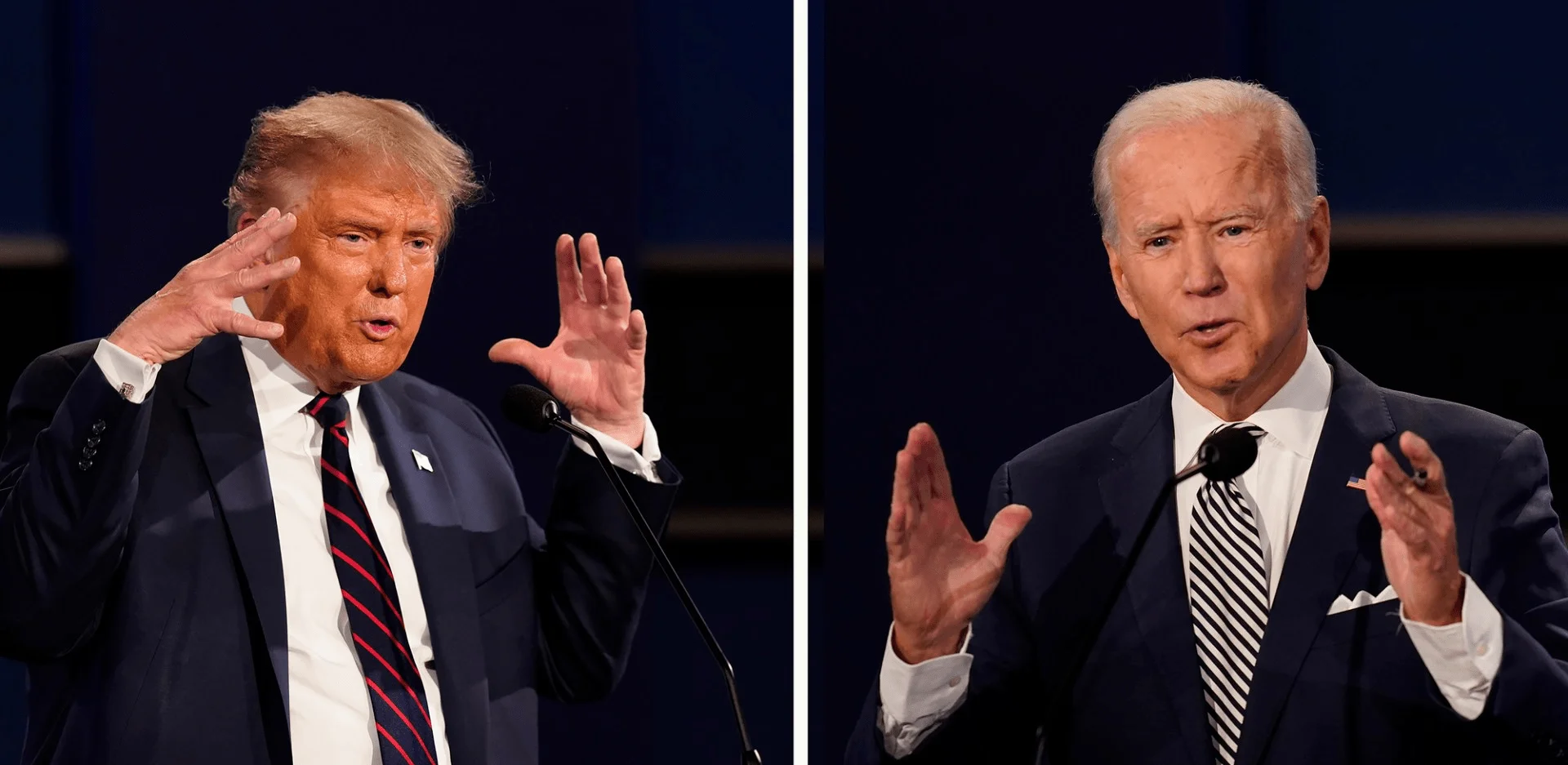
On November 3rd we will know who, between Trump and Biden, will be President.

Throughout this unusual year of 2020, I dedicated much of my time to this event, to share and help understand how this is experienced by American citizens.

Resources to Follow the Election

To best prepare yourself, below are some of the main projects I participated in that I recommend you consult to relive the stages of this long journey:

Articles and Analysis

In my Huffington Post profile you’ll find articles regarding the events and key moments experienced by the US population throughout 2020.

The Book

Shake-Up America – Understanding the 2020 Elections Like an American is the book that helps you understand the mechanisms of the American vote and the way citizens interact, intervene and guide politics in the delicate and decisive moment of the US presidential election.

TV Appearances

During the election campaign I participated in various television programs to analyze key moments of the election:

SkyTG24 - First Trump-Biden Debate

September 30, 2020

Appearance on SkyTG24 after the chaotic first televised debate between Trump and Biden.

RaiNews24 - Pre-election Analysis

October 22, 2020

Appearance on RaiNews24 to analyze the final dynamics of the election campaign.

RaiNews24 - Election Night

November 4, 2020

Live analysis during the counting of votes in the presidential election.

RaiNews24 - Post Election

November 7, 2020

Commentary after the projection of Biden’s victory.

RaiNews24 - Presidential Transition

November 24, 2020

Analysis of the transition between the Trump and Biden administrations.

RaiNews24 - Biden Inauguration

January 6, 2021

Commentary on the Capitol Hill assault and the consequences for American democracy.

Election Night

If you want to follow the US elections live, you’ll find me on the night between Tuesday November 2nd and Wednesday November 3rd:

  • From 00:00 to 02:00 on RaiNews24
  • From 05:00 to 07:00 on RaiNews24

Don’t miss the live coverage of the US presidential election: a vote that promises to be historic for many reasons.


The presidential election of November 3, 2020 marked one of the most critical moments in American democracy. For an in-depth analysis of the results and their implications, consult my book Shake-Up America (Castelvecchi Editore, 2020).